


St. Louis
Greetings,
I am Steven Hofer, Special Agent in Charge of the Drug Enforcement Administration's St. Louis Division, and I am pleased to welcome you to our Operation Engage webpage.
Every day, DEA personnel work alongside our federal, state, and local law enforcement partners to combat drug trafficking and protect the American people. While enforcement remains at the heart of our mission, we recognize that making our communities safer requires much more than arrests and seizures. It requires education, prevention, awareness, and strong partnerships with the communities we serve.
Fentanyl and other dangerous illicit drugs continue to threaten individuals and families throughout our communities. These threats do not discriminate by age, background, or neighborhood, and addressing them requires all of us working together.
Operation Engage is an important part of that effort. Through this initiative, the St. Louis Division is committed to working with schools, parents, community organizations, healthcare professionals, and local leaders to increase awareness of emerging drug threats and provide the information and resources needed to make informed decisions.
Our Operation Engage efforts include:
- Community Partnerships and Education: Working with community leaders, organizations, and stakeholders to share information about current drug threats, prevention strategies, and available resources.
- Youth Engagement: Providing age-appropriate educational opportunities to help young people understand the dangers associated with fentanyl and other illicit drugs and make healthy, informed choices.
- DEA Citizens Academy: Offering community members an opportunity to learn about DEA's mission, the challenges of drug law enforcement, and the importance of collaboration between law enforcement and the public.
- Community Outreach and Prevention: Supporting prevention programs, educational events, and National Prescription Drug Take Back Day initiatives to promote awareness and reduce the risks associated with drug misuse.
I firmly believe that strong partnerships build stronger and safer communities. Every parent who starts a conversation, every educator who shares important information, and every community member who becomes involved contributes to this effort.
I encourage you to explore the resources available through Operation Engage, share this information with your family and neighbors, and look for opportunities to become involved. Together, we can make a meaningful difference in protecting our communities and the next generation.
Thank you for your interest in Operation Engage and for your commitment to making the St. Louis area a safer place to live, work, and raise a family.
Steven L. Hofer
Special Agent in Charge
DEA St. Louis Division
Learn more about illicit fentanyl and counterfeit pills
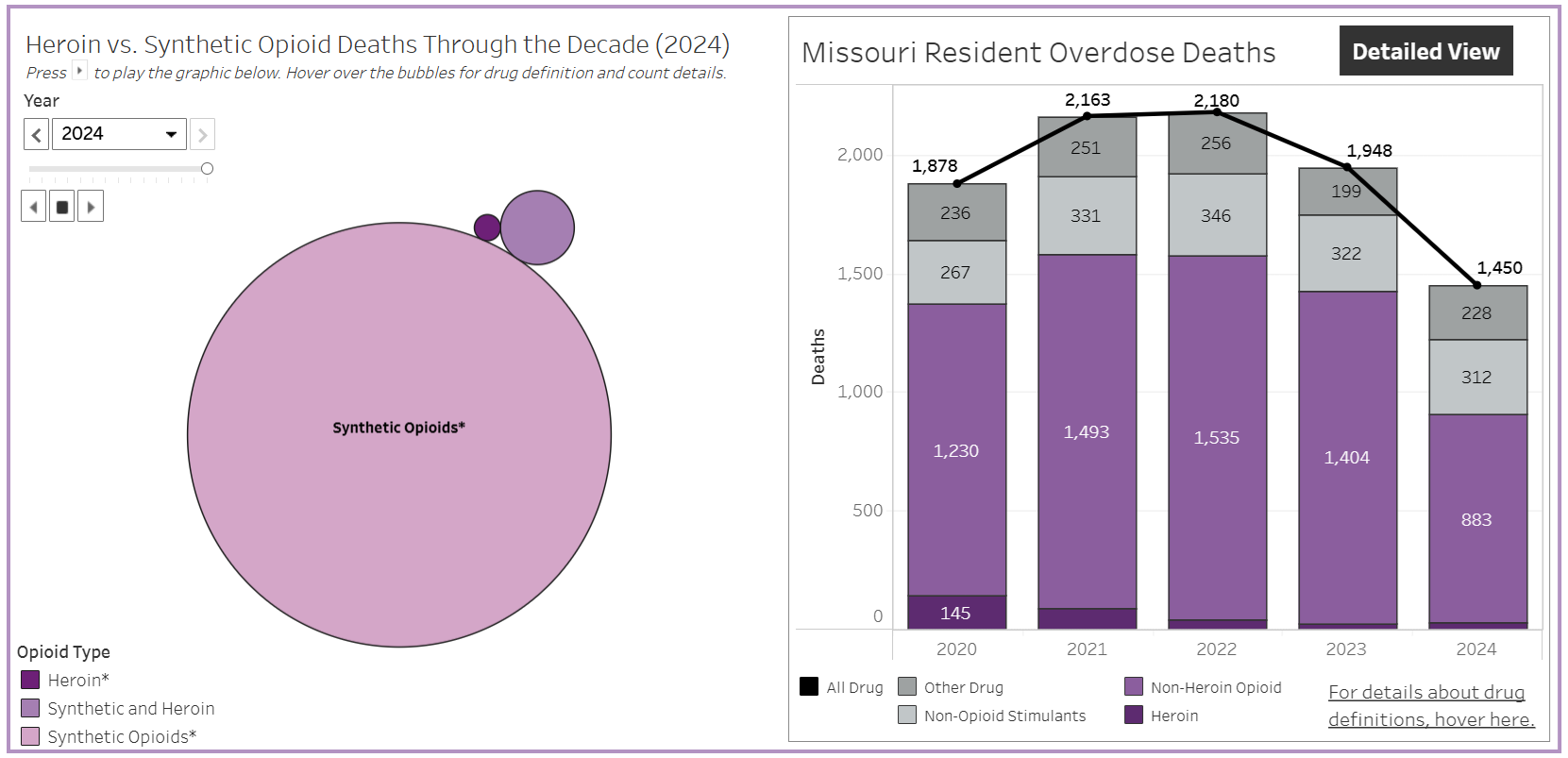
Source: Fatal Drug Overdose Dashboard | Missouri Department of Health and Senior Services
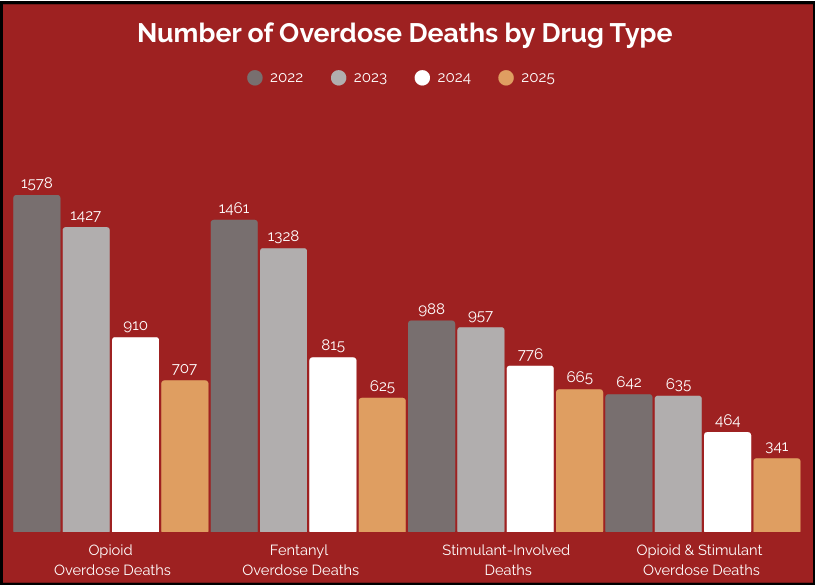
These are the key takeaways from the University of Missouri, St. Louis Science Addiction Team 2025 Drug Overdose Death Report.
- Overall: Overdose deaths fell 17%, from 1,450 in 2024 to 1,205, marking the third year in a row of decline. Deaths dropped both year over year and quarter over quarter, and Missouri’s overdose rate is now below the US rate (preliminary 2025 CDC data).
- Drug involvement: The share of deaths involving opioids fell below 2016 levels, but about 9 in 10 opioid deaths still involve fentanyl. Stimulant-related deaths decreased, but their share of total deaths slightly increased.
- By Demographics: White males had the largest decrease of any reported demographic group, both in total number of deaths and in the percentage decrease of the population mortality rate. Black individuals remain disproportionately affected, particularly Black males, whose overdose death rate is more than 3 times that of any other demographic group.
- By region: Every region saw fewer deaths, with the largest drops in the Southeast (-38%) and Southwest (-34%). The St. Louis region had the most deaths and the smallest decrease of any region, though St. Louis and Kansas City have similar rates by population (24 and 25 per 100,000 people).
Overdose deaths have peaked and are now falling below pre-pandemic levels, both nationally and in Missouri. Missouri’s rate passed the national rate in 2017 as fentanyl spread, and statewide efforts have since pushed it slightly below the national average.
This progress reflects the collective impact of expanded naloxone access, overdose response training, and treatment and recovery services across Missouri. Still, 1,205 Missourians lost their lives to overdose in 2025, and every one of those deaths is one too many.
View the full report here: The 2025 Missouri Drug Overdose Death Report
The opioid supply remains heavily driven by synthetic opioids, meaning fentanyl is still the primary lethal threat whenever opioids are involved. Overall overdose fatalities are trending downward, which is encouraging news. However, fentanyl remains the deadliest driver among opioid cases, and stimulants are becoming a larger relative piece of the overdose crisis—often because stimulants are mixed with fentanyl or used alongside other substances. The DEA St. Louis Field Division is pleased to continue Operation Engage to help combat the impact of illicit fentanyl and the toll it has taken on the City of St. Louis and surrounding communities. DEA will take this opportunity to educate and engage community members, health departments, schools, businesses, healthcare professionals, and policy makers to advocate for sustainable drug prevention initiatives and decrease the number of fentanyl poisonings in the community.
Find treatment in your area. Go to FindTreatment.gov to search for general drug treatment facilities in your area. On this site, you can find facilities that offer various payment options (including free and no-cost care), youth treatment facilities, special programs for Veterans, plus more.
Otherwise, enter your zipcode below to find substance abuse treatment facilities in your area.
Prevention Resources
One Pill Can Kill: DEA-led campaign that provides awareness of the increasing fentanyl related overdose deaths we are seeing nationwide. Fentanyl and opioids are affecting local youth. One Pill Can Kill website can provide facts for families wanting to learn more about the dangers of counterfeit pills and fentanyl.
Get Smart About Drugs: This is a resource for parents, educators and caregivers. This website also provides a range of DEA publications, available in both English and Spanish.
Together for Families: Families play a key role in preventing and responding to substance use. Too many families are grieving the death of a loved one due to substance use or coping with the stress that comes from loving a person affected by substance use or misuse. Fortunately, there are thousands of professionals and volunteers involved in all types of organizations who are in positions to help families help their loved one. The Drug Enforcement Administration is honored to partner with these organizations at the state, national and local level. Together for Families seeks to be a place where you can find information that helps you wherever you are on your journey.
SAMHSA: “Talk. They Hear You.” is a free mobile app that helps you prepare for one of the most important conversations you may ever have with your children about underage drinking and drug use. The app provides parents and caregivers of children and teens ages 9 to 15 with the tools and information they need to start talking with their children early about the dangers of alcohol and drugs.
For more info: https://www.youtube.com/watch?v=JL2XMiOO0Fg
Hidden in Plain Sight: Can you see the signs of drug use? This mock teenage bedroom will display some everyday items that can actually be indicators of drug use or risky behavior.
Addiction is Real: View a parent toolkit to learn how to start a conversation about substance use with your children.
Dead on Arrival: Counterfeit pills with fentanyl are deadly. This film by VOID (Victims of Illicit Drugs) is an eye-opening story from the families who have lost a loved one. There versions in both English and Spanish.
Operation Prevention: The DEA and Discovery Education have created Operation Prevention to provide communities with proactive digital tools to raise awareness about the dangers of substance misuse. This resource is free and is available in English and Spanish for students in grades 3-12, plus additional resources designed for educators, families, and professionals.
Campus Drug Prevention: The DEA provides institutions of higher education and their communities with this resource to prevent drug misuse among college students.
Just Think Twice: Looking for prevention resources specifically for young people? Go to the teen-focused site Just Think Twice. Here, youth will be able to get facts about drug use and learn ways to live a drug-free life.
NIDA for Teens: This website provides helpful drug facts as well as games and activities teens can do to learn more about the dangers of drugs.
Opioid Basics: Center for Disease Control offers more information about opioids and the different types there are out there that can cause harm and addiction.