Cartels
The Jalisco New Generation Cartel
The Jalisco New Generation Cartel (CJNG) is a key supplier of illicit fentanyl to the United States, and one of Mexico’s most powerful, influential, and ruthless transnational criminal organizations. Forming around 2011 out of the remnants of the Sinaloa Cartel-affiliated Milenio Cartel, CJNG has become independent from key members linked by blood ties or marriage to the Gonzalez-Valencia money laundering organization, known as Los Cuinis.
Like the Sinaloa Cartel, CJNG reaps billions of dollars in profit from the manufacture of illegal synthetic drugs, as well as being one of main suppliers of cocaine to the U.S. market.
Under Ruben Oseguera-Cervantes’ leadership, CJNG has expanded its operations well beyond Mexico’s borders, establishing a presence in over 40 countries. The cartel uses its vast financial resources, unique franchise-based command structure, proclivity for violence, and access to corrupt officials to maintain and expand its influence over Mexico’s illicit drug trade.
CJNG is one of the most significant threats to the public health, public safety, and national security of the United States. The cartel operates clandestine laboratories in Mexico where they manufacture illicit drugs and then utilize vast distribution networks to transport drugs into the United States.
CJNG associates, facilitators, and affiliates operate in almost all 50 U.S. states.
CJNG is heavily involved in the manufacturing, trafficking, and distribution of illicit drugs, such as fentanyl, methamphetamine, and cocaine, as well as maintaining a vast money laundering operation through CJNG’s financial arm, Los Cuinis. Los Cuinis featured prominently in the leadership structure of the cartel, oversees the cartel’s diverse network of money laundering operations to repatriate global illicit drug proceeds back to Mexico. This group and other CJNG factions use Chinese Money Laundering Networks (CMLNs), cryptocurrency exchanges, bulk cash smuggling, trade-based money laundering, and other methods to launder illicit drug-related proceeds.
CJNG is likely increasing its involvement in non-drug activities, including gasoline theft, extortion , human smuggling, real estate schemes—including timeshare fraud—for money laundering purposes. CJNG members increasingly participate in these activities to diversify revenue streams and protect drug trafficking assets from law enforcement seizure.
CJNG Leadership
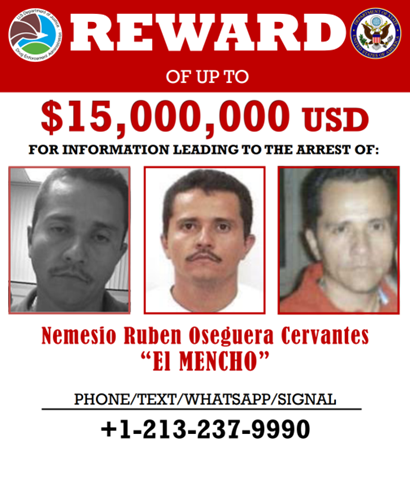
Nemesio Rubén Oseguera Cervantes, aka El Mencho, is the co-founder and current leader of CJNG. Since 2017, Oseguera Cervantes has been indicted several times in the United States for drug trafficking. The most recent indictment, in April 2022, charged Oseguera Cervantes with engaging in a continuing criminal enterprise; conspiracy to manufacture and distribute methamphetamine, cocaine, and fentanyl for importation into the United States; and use of a firearm during and in relation to drug trafficking crimes. Oseguera Cervantes remains a fugitive and the subject of a reward of up to $15 Million for information leading to the arrest and/or prosecution under the U.S. Department of State Narcotics Rewards Program . (Read More: Nemesio Oseguera-Cervantes ; Reward Increased Up to $15 Million for Information Leading to Arrest and/or Conviction of Cartel Leader - United States Department of State).
Significant CJNG Arrests & Prosecutions
On August 13, 2025, Mexico transferred custody of Abigael Gonzalez Valencia (aka Cuini) to the United States where he now faces drug-trafficking charges in the District of Columbia. (Read More: Office of Public Affairs | 26 Fugitives Wanted for Violent and Serious Crimes Returned to the United States from Mexico Including Leaders of Foreign Terrorist Organizations and Alien Smuggling Organization | United States Department of Justice).
On June 20, 2025, Jose Gonzalez-Valencia was sentenced to 30 years in federal prison in the United States for his role in a major drug trafficking conspiracy. Gonzalez-Valencia, a top-leader and co-founder of the armed and violent Los Cuinis drug cartel - the financial arm of CJNG - worked alongside his brothers, Gerardo and Abigael, to traffic multiple tons of cocaine from South America to the United States. As one of Los Cuinis’ top leaders, Jose Gonzalez-Valencia directed acts of extreme violence in furtherance of drug trafficking activities, including the murder of an individual who allegedly stole a shipment of approximately 1,000 kilograms of cocaine from Los Cuinis. His brother, Abigael, another top leader of Los Cuinis and El Mencho’s brother-in-law, was arrested in 2015 by Mexican authorities pursuant to the U.S. indictment but fought his extradition to the United States.
Also on June 20, a high-ranking CJNG member and El Mencho’s son-in-law, Cristian Fernando Gutierrez-Ochoa (aka El Guacho) pleaded guilty to one count of international money laundering conspiracy. (Read More: Office of Public Affairs | Co-Founder of Los Cuinis Drug Cartel Sentenced to 30 Years in Prison; High-Ranking Cartel de Jalisco Nueva Generación (CJNG) Operative Pleads Guilty | United States Department of Justice).
On March 7, 2025, El Mencho’s son, Ruben Oseguera-Gonzalez, known as El Menchito, was sentenced to a term of life in prison plus 30 years to run consecutively and ordered to forfeit over $6 Billion in drug trafficking proceeds. Before his arrest, Oseguera-Gonzalez was CJNG’s second-in-command and led CJNG for nearly seven years. He is responsible for trafficking more than 50 metric tons of cocaine and supervising drug labs that produced more than 1,000 metric tons of methamphetamine in Mexico. In 2013, he was one of the first contributors to the fentanyl epidemic in the United States, pledging to “do it big” and build an empire from counterfeit oxycontin pills laced with fentanyl. As the evidence at trial showed, he also committed heinous acts of violence. According to statements made in court and trial testimony, Oseguera-Gonzalez ordered the murder of more than 100 people, some of whom he murdered himself. (Read More: Office of Public Affairs | Notorious Violent Mexican Cartel Leader Sentenced to Life Plus 30 Years in Prison for International Drug Trafficking and Firearms Offenses | United States Department of Justice)
On February 27, 2025, United States Attorney General Pam Bondi announced the transfer of custody of 29 defendants from Mexico to the United States who are facing charges in federal districts around the country related to drug-trafficking, money laundering, and other crimes. One of these individuals is reportedly El Mencho’s brother, Antonio Oseguera-Cervantes, now faces charges in the District of Colombia. (Read More: Office of Public Affairs | Attorney General Pamela Bondi Announces 29 Wanted Defendants from Mexico Taken into U.S. Custody | United States Department of Justice).
The Sinaloa Cartel
The Sinaloa Cartel (Cártel de Sinaloa, aka CDS) is one of the world’s oldest and most powerful drug cartels. Through its birthplace and stronghold in the Mexican state of Sinaloa, the cartel is one of the largest producers and traffickers of fentanyl and other illicit drugs to the United States. For decades, the Sinaloa Cartel has smuggled multi-kilogram quantities of illicit fentanyl, methamphetamine, cocaine, heroin, and marijuana into the United States and around the globe.
The Sinaloa Cartel remains one of the most significant threats to public safety, public health, and national security. Sinaloa uses a vast distribution system to transport drugs into the United States, primarily through California and Arizona, and supplies illicit drugs and drives violence across American communities across the United States.
DEA has identified tens of thousands of Sinaloa members operating worldwide in decentralized networks under the larger Sinaloa umbrella. DEA has investigated Sinaloa operations in at least 40 countries worldwide and, with our foreign counterparts, are investigating their expansion into lucrative markets such as Europe, Asia, and Australia.
Cartel members engage in a wide range of violent illegal activities aimed at protecting their criminal empires and expanding their profits such as drug trafficking, money laundering, weapons trafficking, human smuggling, prostitution, and extortion. The cartel is heavily armed with military grade weapons and quick to utilize extreme acts of violence to inflict terror in pursuit of their goals. Examples of which were seen during the “Culiacanazos” of October 2019 and January 2023, wherein the Sinaloa Cartel launched waves of extreme violence across Culiacán and the state of Sinaloa, blocking highways, burning vehicles, attacking security forces and even firing on a civilian passenger plane at Culiacán International Airport – prompting the airport to close. Both events were undertaken in pursuit of securing the release of one of their leaders who had been captured by Mexican security forces.
Sinaloa cartel members are well versed at using social media platforms and encrypted messaging applications to advertise and distribute poison, as well as to recruit couriers and traffickers. They supply networks of local independent drug trafficking groups, street crews, and gangs whose main objective is the last mile of distribution.
Significant Sinaloa Arrests, Prosecutions, & Sentencing
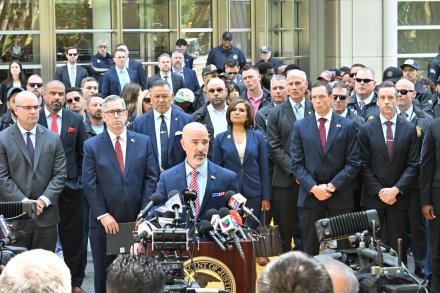
On July 20, 2026, Ismael Zambada Garcia also known as El Mayo, 76, of Sinaloa, Mexico, was sentenced to life in prison and ordered to pay $15 billion in forfeiture for his role as the principal leader of a continuing criminal enterprise - the Sinaloa Cartel (the Cartel), one of the most violent and powerful drug trafficking organizations in the world - and for his involvement in racketeering.
Watch Press Conference: USAO Eastern District of New York | El Mayo Sentencing Press Conference
On August 25, 2025, the co-founder of the Sinaloa Cartel, Ismael ‘El Mayo’ Zambada Garcia, pled guilty for his role as a principal leader of one of the most violent, ruthless and powerful drug trafficking organizations in the world.
For decades, under El Mayo’s leadership, the Sinaloa Cartel profited billions of dollars by flooding the United States and elsewhere with cocaine, heroin, and most recently fentanyl. El Mayo’s rise to power began with the cartel’s inception and ended with his arrest in July 2024. He devoted his efforts over the decades to increasing and enhancing the power of the cartel. Under his leadership, the Sinaloa Cartel regularly used violence, murder and intimidation against law enforcement. He operated with impunity and bribed government officials and law enforcement to ensure his freedom and safety.
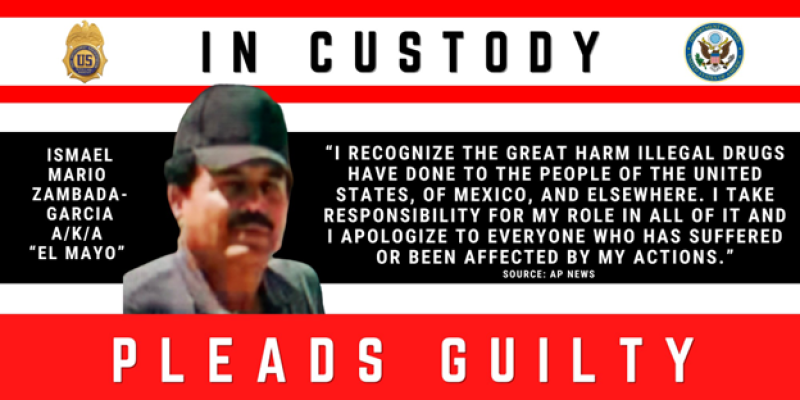
Watch (Press Conference) Department of Justice | Homepage | United States Department of Justice
El Mayo’s co-conspirator, Joaquin Guzman Loera, best known as El Chapo, was captured in 2014, which was a significant achievement for law enforcement in Mexico and the United States, and a major step forward in the shared fight against transnational organized crime, violence, and drug trafficking. Dept. Of Justice Statement On The Arrest Of Joaquin "El Chapo" Guzman Loera

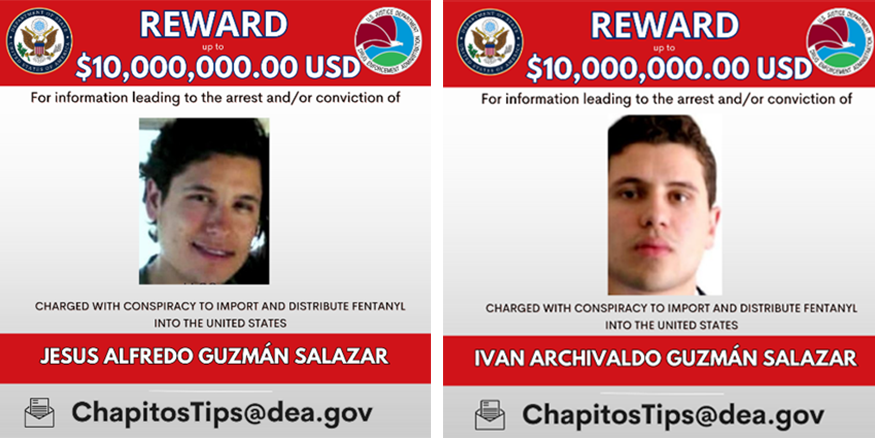
Ivan Guzman Salazar, Alfredo Guzman Salazar, Joaquin Guzman Lopez, and Ovidio Guzman Lopez inherited and expanded their father’s global drug trafficking empire. Collectively, known as the Chapitos, El Chapo’s sons are the architects of the deadliest drug epidemic the United States has ever faced – that of illicit fentanyl. Following their father’s arrest and extradition to the United States, the Chapitos modernized the cartel, making it more ruthless, more violent, and more deadly. Four of Chapo’s Sons Indicted for Large-Scale Drug Trafficking, Money Laundering and Violent Crimes as Alleged Leaders of Sinaloa Cartel; DOJ and DEA Announce Charges against the Chapitos; Statement from DEA Administrator Milgram on the Arrests of Ismael Zambada Garcia and Joaquin Guzman Lopez
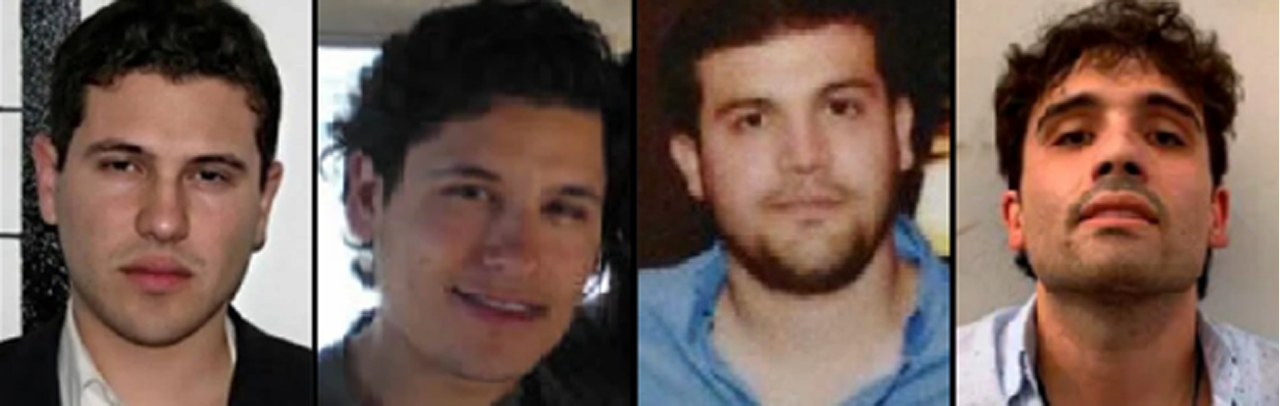
In April 2023, indictments against the Chapitos were unsealed demonstrating the Sinaloa Cartel’s involvement in drug trafficking activities into the United States, and violence, spanning over a decade and a half. The Chapitos and the Sinaloa Cartel have reaped hundreds of millions of dollars in profits by flooding the United States with fentanyl.
In July 2025, Ovidio Guzman Lopez pled guilty to two counts of drug conspiracy and two counts of knowingly engaging in a continuing criminal enterprise in the U.S. District Court of Chicago. As part of his plea agreement, Guzman Lopez admitted he and his brothers, the Chapitos, assumed their father’s leadership role following his arrest. They used a network of couriers to smuggle drugs into the United States, once distributed they used various methods—like bulk cash shipments, wire transfers, trading goods, and even cryptocurrency—to launder the profits back to Mexico. Guzman Lopez also admitted to resorting to violence against law enforcement, civilians, and rival traffickers to protect the cartel’s drug operations.
Joaquín Guzman Lopez self-surrendered to federal authorities after arriving in the United States in a private plane along with Ismael ‘El Mayo’ Zambada Garcia on July 25, 2024.
Ivan Guzman Salazar and his brother Jesus Alfredo Guzman Salazar continue to share leadership roles in the Sinaloa Cartel and its fentanyl trafficking operations. The U.S. Department of State is offering a reward of up to $10 million for information leading to the arrest and/or conviction of either brother. Information can be sent to ChapitosTips@dea.gov.