


Henry Richard Crespo-Guzman, Former Bolivian Air Force Colonel, Extradited To The United States From Bolivia On Cocaine Importation And Firearms Charges
Noviembre 20, 2026
|Share Article
|Download Press Release
United States Attorney for the Southern District of New York, Jamie McDonald, and Administrator of the Drug Enforcement Administration (“DEA”), Terrance C. Cole, announced today that HENRY RICHARD CRESPO-GUZMAN, a/k/a “Colonel Crespo,” was extradited on November 19, 2026, from Bolivia to the United States to face federal charges for conspiring to import cocaine into the United States and using and possessing machineguns in connection with that cocaine importation conspiracy. CRESPO-GUZMAN was arrested by Bolivian authorities on August 28, 2026, and will make his initial appearance in the Southern District of New York before the Honorable Gary Stein on November 20, 2026. CRESPO-GUZMAN will be presented this afternoon before U.S. District Judge Sidney H. Stein, and the case has been assigned to U.S. District Court Judge Victor Marrero.
“Crespo-Guzman abused his position in the Bolivian military to aid drug traffickers by providing military facilities and armed personnel,” said U.S. Attorney Jamie McDonald. “As alleged, the defendant personally participated in a cocaine importation conspiracy that was intended to bring planeloads of cocaine north for ultimate importation into the United States. The defendant is alleged to have participated in some of these meetings while in uniform and at military facilities under the armed protection of his subordinates in the Bolivian Air Force. This is the latest example of our work with the DEA to root out cocaine-fueled corruption.”
“This extradition sends a powerful message to those who abuse positions of public trust to facilitate the trafficking of dangerous drugs into the United States: no one is beyond the reach of American justice,” said DEA Administrator Terrance C. Cole. “Crespo Guzmán allegedly exploited his position in the Bolivian military to protect cocaine trafficking operations that threatened American communities. DEA will relentlessly pursue those who enable these criminal organizations, regardless of their position or influence. I commend our DEA personnel and Bolivian law enforcement partners whose cooperation made this extradition possible and reflects our renewed commitment to confronting international drug trafficking.”
According to the Superseding Indictment and public court filings:(1)
From at least in or about September 2020, up to and including in or about August 2021, and while the defendant was a Colonel in the Bolivian Air Force, the defendant worked with others to manufacture and distribute large quantities of cocaine intended for importation to the United States. As part of his duties with the Bolivian Air Force, the defendant maintained access to airfields and military facilities, including an Air Force Base in Cuatro Canadas, Bolivia (the “Bolivian Air Force Base”). The defendant used the Bolivian Air Force Base to safeguard the transportation of cocaine loads for ultimate importation to various countries, including the United States.
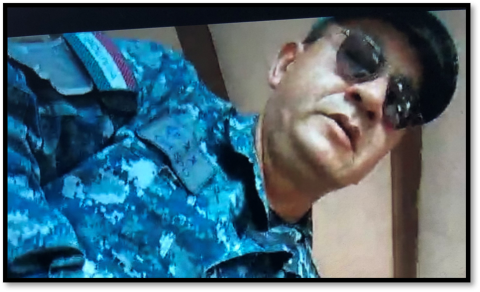
During the investigation, the defendant conducted meetings at the Bolivian Air Force Base while dressed in his official Bolivian Air Force Uniform, while subordinate members of the Bolivian Air Force stood guard with automatic weapons. At one such meeting, the defendant described the Bolivian Air Force base, explained that it was part of a restricted military zone, discussed the types of aircraft it could accommodate, and detailed, in particular, the quantities and time needed to load cocaine onto aircraft at that facility. Ultimately, the defendant and his co-conspirators agreed to, and did, manufacture cocaine intended for importation to the United States. An image of the defendant in his official uniform captured during that meeting is depicted below:
CRESPO-GUZMAN, 56, is charged with: (1) conspiring to import cocaine into the United States; (2) using, carrying, and possessing machineguns and destructive devices during, and to possess machineguns and destructive devices in furtherance of, the cocaine importation conspiracy; and (3) conspiring to use and carry machineguns during, and to possess machineguns in furtherance of, the cocaine importation conspiracy. If convicted, CRESPO-GUZMAN faces a mandatory minimum sentence of 10 years in prison and a maximum term of life in prison on Count One, a mandatory minimum sentence of 30 years in prison and a maximum term of life in prison, which must run consecutively to any other sentence, on Count Two, and a maximum term of life in prison on Count Three.
The maximum potential sentences in this case are prescribed by Congress and are provided here for informational purposes only, as any sentencing of the defendant will be determined by the judge.
Mr. McDonald praised the outstanding efforts of the DEA. Mr. McDonald further thanked the United States Department of War Southern Command, the DEA Lima Country Office, the United States Department of State, the United States Embassy in La Paz, Bolivia, the United States Department of Homeland Security – Homeland Security Investigations Bolivia Office, INTERPOL Bolivia, the Bolivian National Police, and the Fuerza Especial de Lucha Contra el Narcotráfico - Grupo de Inteligencia y Operaciones Especiales, or FELCN – GIOE, for their assistance and partnership. The Justice Department’s Office of International Affairs worked with the Government of Bolivia including INTERPOL Bolivia to secure the arrest and extradition of Crespo-Guzman.
This prosecution is being handled by the Office’s National Security and International Narcotics Unit. Assistant U.S. Attorneys Matthew J.C. Hellman, Adam Z. Margulies, David J. Robles, and Chelsea L. Scism are in charge of the prosecution.
The charges in the Superseding Indictment are merely accusations, and the defendant is presumed innocent unless and until proven guilty.
- ^ As the introductory phrase signifies, the entirety of the text of the Indictment and the description of the Indictment set forth herein constitute only allegations, and every fact described therein should be treated as an allegation.
###
###


