News
Release
FOR
IMMEDIATE
RELEASE
June 21, 2007
Contact:
Casey McEnry
Number: 415-436-7994
DEA
Helps
Sacramento
Police
Remove
Drug
Dealers
From
Downtown
Public
Housing
Project
$100K
in Crack
Cocaine,
Three Firearms
and Marijuana
Seized;
7 Arrested
JUN 21 - SACRAMENTO, CA - Drug Enforcement Administration (DEA) Assistant Special Agent in Charge Gordon Taylor, Sacramento Police Chief Albert Najera and United States Attorney McGregor Scott announce today that DEA and the Sacramento Police Department have successfully completed a joint operation designed to remove drug traffickers from the Dos Rios Public Housing complex in downtown Sacramento.
 |
 |
 |
 |
The investigation began in January 2007, when the Sacramento Police Department Problem Oriented Policing (POP) Unit, assigned to downtown Sacramento, contacted the DEA Sacramento District Office and requested assistance with the drug and gang problem plaguing the Dos Rios Housing Complex. The Dos Rios Housing Complex is located off of in-bound 160, between 12th Street and Richards Boulevard, bordering the planned downtown railyard development.
Law enforcement identified several individuals who were allegedly distributing drugs, primarily crack cocaine, inside the complex, to drive-up customers. Agents believe some of the arrested individuals were living inside the housing complex. Those who were not authorized tenants are believed to have been using the residences of family members who were authorized tenants. Other arrested individuals allegedly drove in from outside the complex to sell crack cocaine. The arrested individuals included persons affiliated with validated street gangs, including the Gangster Crips, as well as persons with histories of assault. The DEA and POP team worked together to identify problem residences within the complex and to develop an investigative strategy in conjunction with the United States Attorney’s Office.
DEA, in cooperation with the Sacramento Police Department POP and Vice/Narcotics units, began extended surveillance in the complex, along with a series of undercover drug-buys. While these buys were being conducted over a span of months, several defendants were picked up and arrested on smaller, unrelated drug and firearms charges and then returned to the area after posting bail in their other cases. The investigators continued to conduct undercover purchases through late May 2007. During the first week of June 2007, law enforcement served multiple federal search warrants and conducted numerous arrests relating to the investigation.
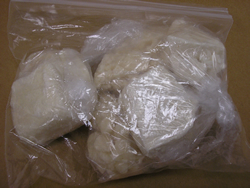
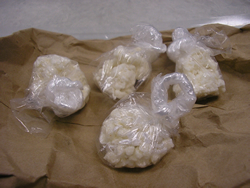
As a result of this operation, approximately two pounds of crack cocaine with an estimated street value of $100,000.00 was seized as well as approximately four pounds of marijuana and three firearms. A total of seven individuals are facing federal and state prosecution, three by the Sacramento County District Attorney’s Office and four by the United States Attorney’s Office in Sacramento.
Of those facing charges in Sacramento Superior Court is Christopher MASON, 37, of Sacramento, who was allegedly selling cocaine base from a residence in the Dos Rios complex. A search warrant based on DEA evidence was served by the Sacramento Police Department SWAT team. As a result of the search, law enforcement seized approximately 94 grams of cocaine base, 3 pounds of marijuana, a loaded handgun and forfeited a 2002 Cadillac Escalade. MASON was previously convicted of assault with a firearm on a person and was convicted multiple times for drugs distribution offenses. MASON is now being prosecuted for drug and firearm offenses related to seizures made in this investigation and is facing a potential life sentence under the “Three Strikes” law. In addition, Tywana CATHEY, 35, and Dianne CUTRER, 39, both of Sacramento, were charged with state drug violations.
The United States Attorney’s Office is prosecuting the following people in federal court: Kelvin GAMBLE, 34, of Sacramento. GAMBLE is charged in a federal complaint with two counts of distribution of crack cocaine after prior felony drug conviction. GAMBLE attempted to flee from officers at the time of his arrest following the delivery of ¼ pound of crack cocaine to an undercover officer. He was apprehended after a foot chase involving several marked units, police dogs and a helicopter. According to the affidavit, GAMBLE has prior felony convictions for possession of crack cocaine for sale, sales/transportation of crack cocaine and possession of a firearm.
Larry BEVERLY, 32, of Sacramento, is charged in a federal complaint with two counts of distribution of crack cocaine. According to the affidavit, BEVERLY has prior arrests for possession of crack for sale and felon in possession of a firearm. At the time of BEVERLY's arrest he attempted to conceal a large amount of crack cocaine inside his buttocks.
Matae MALAE, 20, of Sacramento, is believed to be a validated gang member who is charged by federal complaint in this case with distribution of crack cocaine. According to the affidavit, while this operation was being conducted, MALAE was arrested on separate unrelated charges in March 2007 for possession of crack cocaine for sale. After posting bail in state court, he allegedly returned to Dos Rios and sold more crack cocaine to the undercover buyers. MALAE was again arrested in May 2007 on unrelated state charges for sales/transportation of cocaine and methamphetamine.
Brian PARKER, 33, of Sacramento, is charged in a federal complaint with distribution of crack cocaine after a prior felony drug conviction. According to the affidavit, PARKER has prior felony convictions for possession of crack cocaine for sale, felon in possession of a firearm, possession of marijuana for sale and possession of a controlled substance. He is currently on parole for a drug conviction. PARKER was arrested on June 19, 2007 by the United States Marshal’s Service.
GAMBLE and PARKER each face mandatory minimum terms of imprisonment of ten years and a maximum term of imprisonment of life and a possible maximum fine of $4,000,000. BEVERLY and MALAE each face mandatory minimum terms of imprisonment of 5 years and a maximum term of 40 years of imprisonment and a possible maximum fine of $2,000,000. Federal sentences can be higher than the mandatory minimum sentence depending on an individual defendant's prior convictions and the quantity of crack cocaine sold. Any sentence following conviction would be imposed by the court after consideration of the United States Sentencing Guidelines and the federal statute governing the imposition of a sentence, 18 U.S.C. § 3553. Unlike under state law, there is no early-release parole under federal law.
“Another excellent example of the results that occur when law enforcement agencies combine resources. These were dangerous and violent criminals that will no longer terrorize a neighborhood with their drug dealing activity,” stated Sacramento Police Department Chief Albert Najera.
Gordon Taylor, head of the DEA’s Sacramento Office stated, “With a plethora of prior convictions for violence, firearms and drugs, these repeat offenders have been given more than their fair share of second chances. The residents of this public housing complex can rest easier knowing we are hard at work removing these drug dealing hoodlums from their community.”
United States Attorney Scott stated, “Much can be accomplished with targeted, strategic law enforcement efforts in neighborhoods struggling with gang violence and drug trafficking. The DEA and Sacramento Police Department are to be commended for their effective work addressing crime problems at the Dos Rios Housing Complex.”
“The Sacramento Housing Authority has been working in concert with the Sacramento Police Department over the past several months to remove drug related criminal activity from the Dos Rios housing complex. Based on information from the investigation, we have aggressively pursued and evicted nine households. With the help of the Sacramento POP officers and the DEA we can effectively address criminal activity that jeopardizes the safety of our residents and send the strong message that it will not be tolerated,” said Anne Moore, Executive Director of the Sacramento Housing and Redevelopment Agency.
This investigation was conducted with assistance of the Sacramento Police Department, the United States Attorney’s Office in the Eastern District of California and the Sacramento Housing Authority.
The federal defendants are scheduled for initial court appearances at various times throughout the week in United States District Court. The charges are only allegations and the defendants are presumed innocent unless proven guilty beyond a reasonable doubt.